peripheral vascular disease
Peripheral Vascular Disease (PVD)
Peripheral vascular disease (PVD) is a condition where blood vessels outside the heart narrow, block, or spasm, reducing blood flow to the limbs and other organs.
Most common occurrence is usually in the legs, wherein blood vessels become narrowed or blocked. This reduces blood flow to the muscles and tissues, making it harder for the legs and feet to get enough oxygen.
Book Appointment
Causes and Risk Factors
- Smoking: Severely damages blood vessels and speeds up plaque buildup.
- Diabetes: High blood sugar harms vessel walls and raises risk.
- High blood pressure and cholesterol: Stresses and narrows arteries over time.
- Other factors: Older age, obesity, a sedentary lifestyle, and a family history of vascular disease
Treatment Options
- Lifestyle changes: Quitting smoking, exercising regularly, and eating a healthy diet.
- Medications: Drugs to lower cholesterol, control blood pressure, or prevent blood clots.
- Medical procedures: Minimally invasive treatments like balloon angioplasty and stents, or surgical bypass, to restore blood flow in severe cases
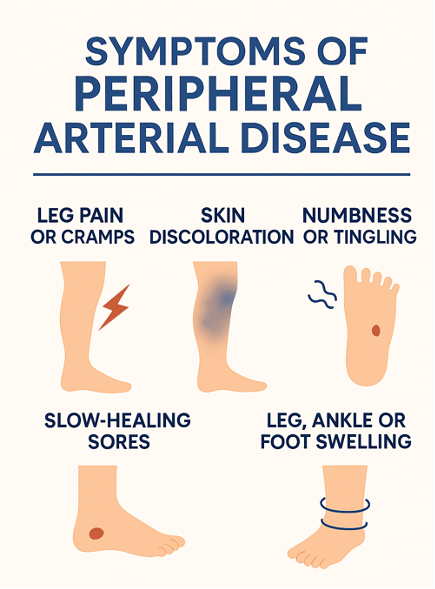
Do not ignore persistent leg pain, non-healing wounds, blackening of the toes or sudden coldness and severe pain in a leg.
These may indicate a serious circulation problem and require urgent medical attention.